Hauling Dirt

Before we could break ground, we needed more of it. Dirt, that is. Lucky for us, there’s a mound not far from the building site.
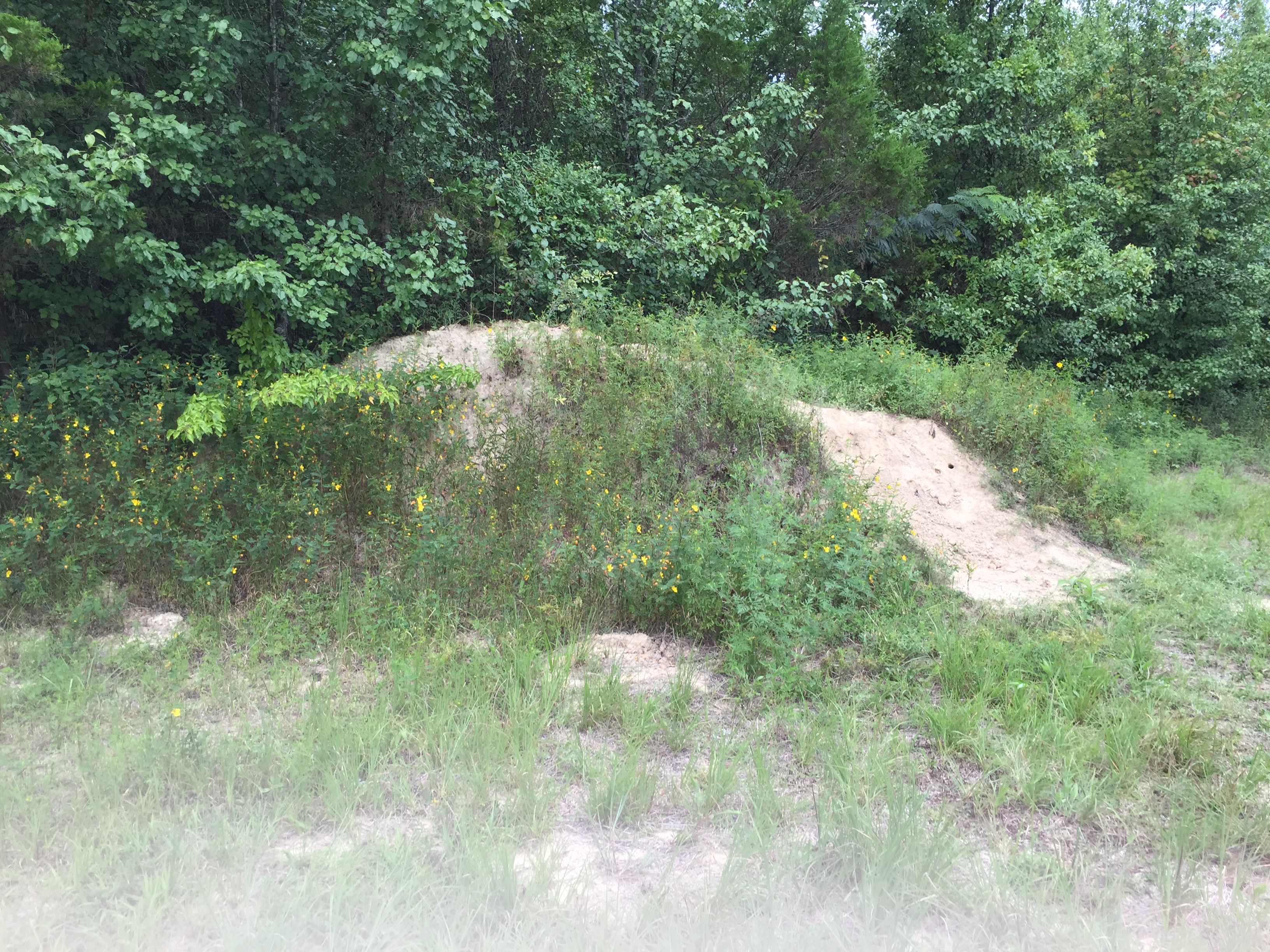
dirt pile before

Dirt pile after

A wheelbarrow worked for the potholes, but not to the extent we needed.

The Conway Home Depot rents Bobcats for $249 + tax, and we would have had to haul it an hour both ways. We hoped we could do better by going local, so we called the first place that came up on a Searcy Google search and reserved one at a considerable discount, quite proud of ourselves.

Saturday morning Chuck and his best friend Dan pull up to a sketchy-looking house surrounded by a fence and a series of piecemeal shacks. It was a junkyard minus the Rottweiler.

The exchange went something like this:

Chuck: “Hello, I’m here to pick up the Bobcat.”

Man: “Bobcat?”

Chuck: “Yes, I called yesterday to reserve one for this morning.”

Man: [Blank look.]

Chuck: “I spoke to Curtis?”

Man: “Oh. Well, I’m Curtis.”

It turns out that the Bobcat was ready, but the trailer was in a shack, parked behind a forklift that, they soon discovered, was out of gas. That wouldn’t have been a problem had Curtis not directed Chuck to fill it up with a gas can that turned out to contain pink liquid and that would have to be siphoned before the forklift could be moved.

We were lucky that our work day turned out to be cloudy and an unseasonably cool 86 degrees because it took two hours just to rent and load the Bobcat.

Driving one of these things is a lot harder than it looks.
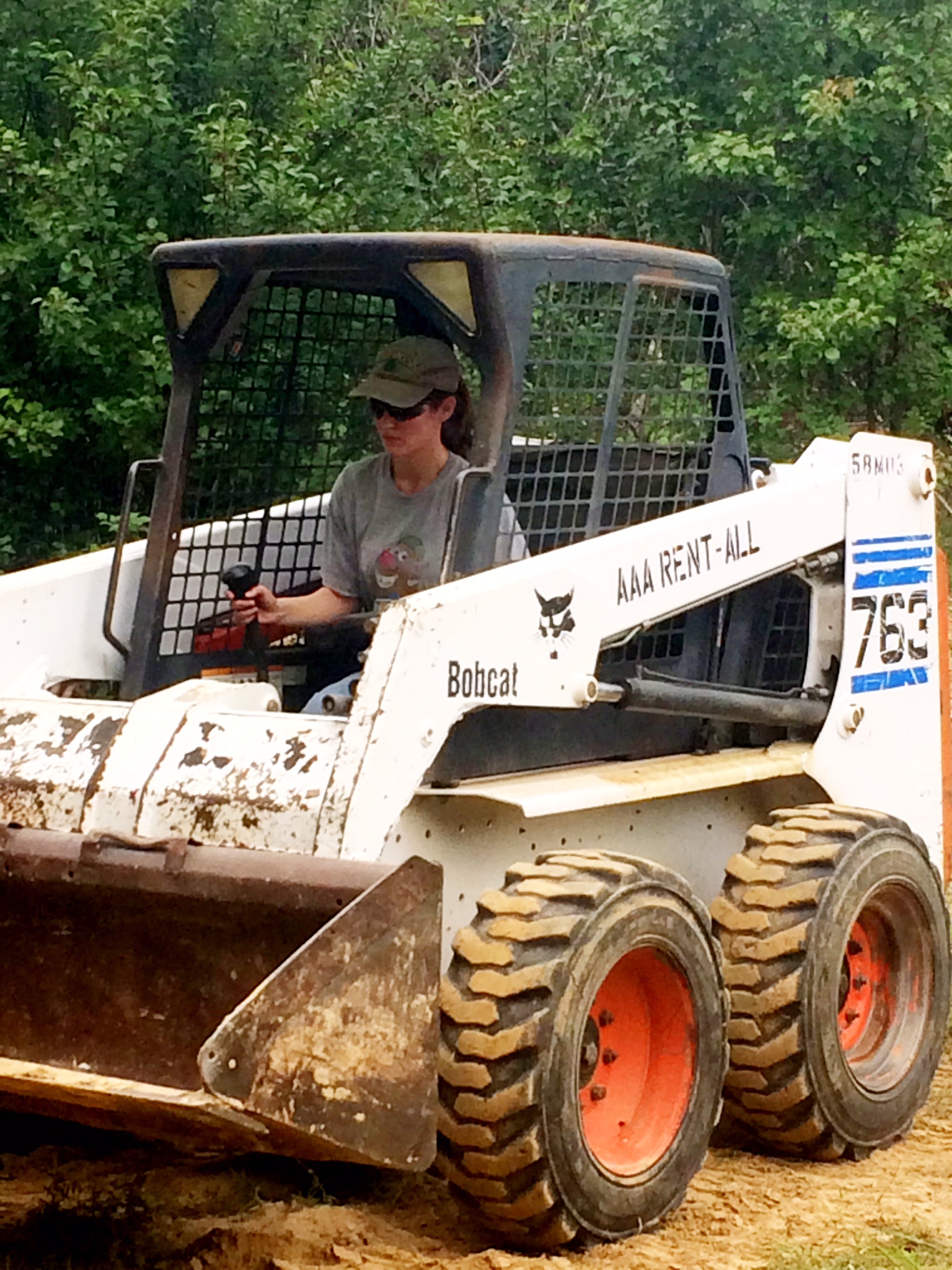
bobcat

And for future reference: they won’t go in reverse unless you first pull forward. It was sort of a metaphor for our day: going in the opposite direction before any ground could be gained.

While the guys figured out how to operate a machine whose switch labels had long worn off, my friend Laurie gave me ideas for laying out the future garden, taking a page out of the permaculture playbook, such as planting parsley, Echinacea, eggplant, and other herbs around trees to create their very own microclimate. We also scouted out strategic places for a fir and a fast-growing hardwood to create greater seclusion in front of the cabin. She also advised that the number of old, rotting trees on part of the land will make great fertilizer at the bottom of a raised bed. I could almost feel my brown thumb turning green.

Once the guys got the hang of operating the bucket via pedals and the right angle at which to charge the pile, we spread the dirt.

cabin site with dirtcabin spot with dirt

It took surprisingly little time to complete the task, so after a hard-earned lunch break, we finished out the driveway. Like the foundation of our cabin, the driveway will need gravel, but now it’s at least level with the ground around it.

dirt road from land

We left feeling pretty triumphant, even if later I discovered that I had provided a host of mosquitoes with their daily dose of iron. I had so many bites that they blistered—it felt like chicken pox all over again or the time I somehow managed to get poison ivy on my back. I’ll remember to re-apply the bug spray more frequently, and in the meantime, I’d like to give a shout out to my new best friend, the oatmeal bath.
Less is More

Yellowing grass and scorched leaves signal the approach of another school year. Something in the air has changed, and though we’re barely into our hottest month, summer slumps toward autumn. This summer was one of rain followed closely by heat. I knew that if the cabin weren’t built by June, it would have to wait.

Chuck will soon resume his two-hour commute, and we’ll hope for a mild Labor Day weekend to erect our tiny cabin. At the moment, the heat doesn’t matter much anyway: he’s got syllabi to construct and a couple articles to finish. His middle child will be off to college in two weeks, and there are plenty of last-minute preparations. The youngest has started daily band practice twice a day, and the eldest will be giving birth in early October.* It’s a season of change for our family, one only navigable with pause.

To a certain extent, we’ve hardly paused. The first steps toward a tiny cabin involve getting our current house in order. We’ve gone through boxes of computer cables, outdated paperwork, and old clothes. The laundry room is currently at a level of cleanliness that makes even my mother proud, and I’ve set up a cozy (albeit cluttered) home office.

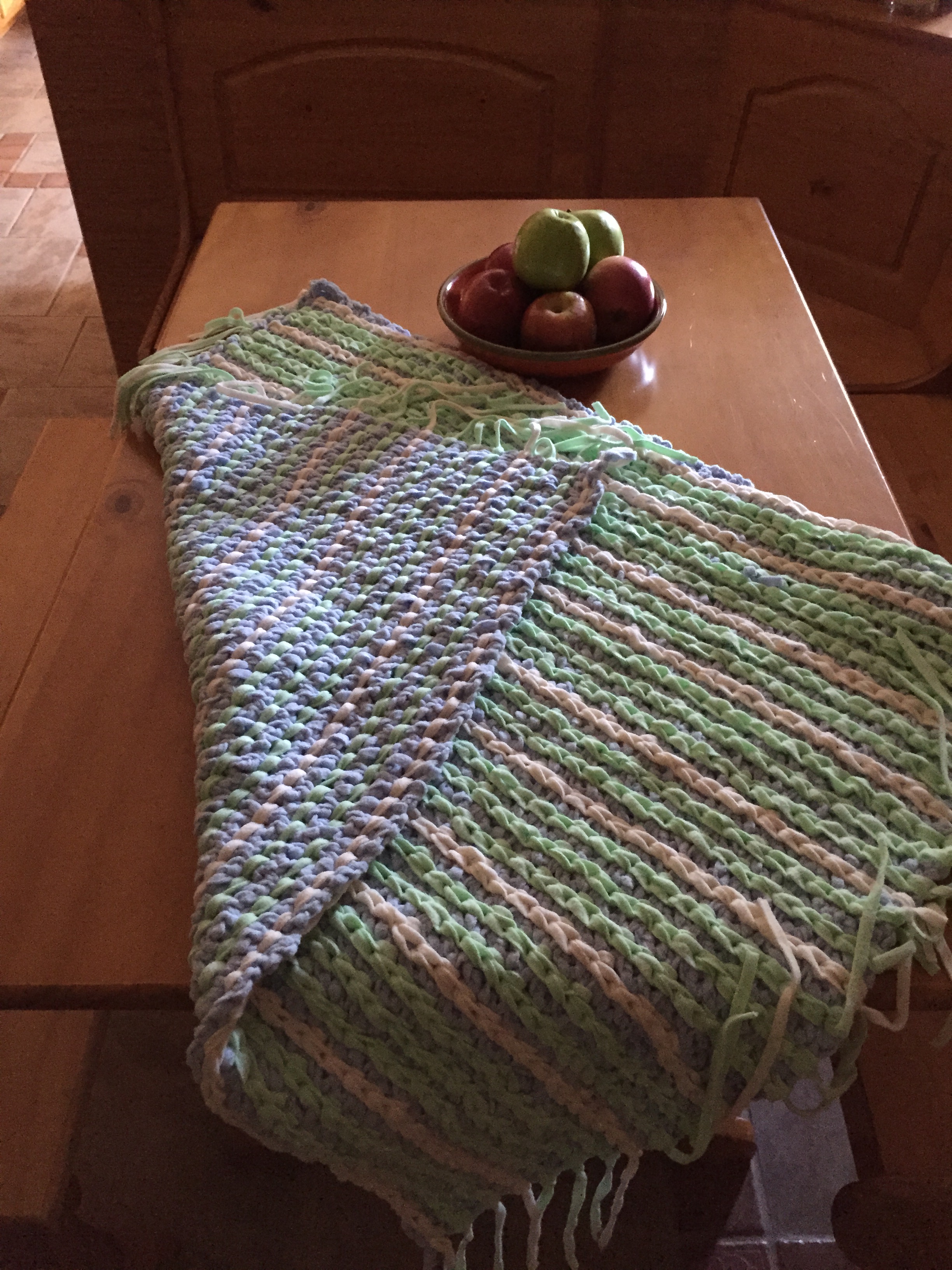
It’s been sunup to sundown work, yet I’ve had more time to read for pleasure (Greg Brownderville’s Gust), crochet baby blankets, and, yes, play some old school Dr. Mario.

Baby blanket

*Since writing this post, my step-daughter has had her baby–two months early! Though Alexander is only 3 pounds 15 oz., he’s doing well.

On the Farm

Bird's Nest

After spending May, June, and July picking a spot and clearing the land, I now realize the appeal of building a tiny house on a trailer. And since we have to drive an hour just to get to the land, building on a trailer would have enabled us to work from our own home–where there is water, electricity, and a shady carport!

But there’s something about building the house literally from the ground up. For us, this adventure is also about reconnecting to the earth below our feet.  Continue reading

Tree Removal

In Robert Frost’s poem “Mending Wall,” his neighbor insists that “good fences make good neighbors.”

Many of us like our boundaries, and a fence is a way to clearly communicate a do-not-cross zone. (We put up our fence a few years ago after I saw one man chasing another with a pistol.) A fence can also keep animals and children corralled as well as offer privacy. But like the fence in “Mending Wall,” they need to be repaired from time to time.

Driveway 5-13-15 after

Driveway 5-13-15

Driveway July 2015

Driveway July 2015

Our neighbor out at the land asked if we could trim or remove the Bradford Pears growing between our driveway and his fence. Limbs were growing over into his yard, and the trees were preventing him from making repairs.

We showed up one morning with that singular purpose: to cut them down. As can be said about most of our work days, we had no idea what we were getting ourselves into.

What at first appeared to be four or five substantial trees growing along our neighbor’s fence line turned out to be 50-60 smaller trees growing in clumps, ready to scourge.Tree Roots

Generously, our neighbors and their kids came out to help. We used the clippers on smaller trees, Chuck chainsawed the larger ones, and we hauled them to the open field, making a brush pile. The sun wasn’t too hot, and after less than five hours we’d taken them all out.

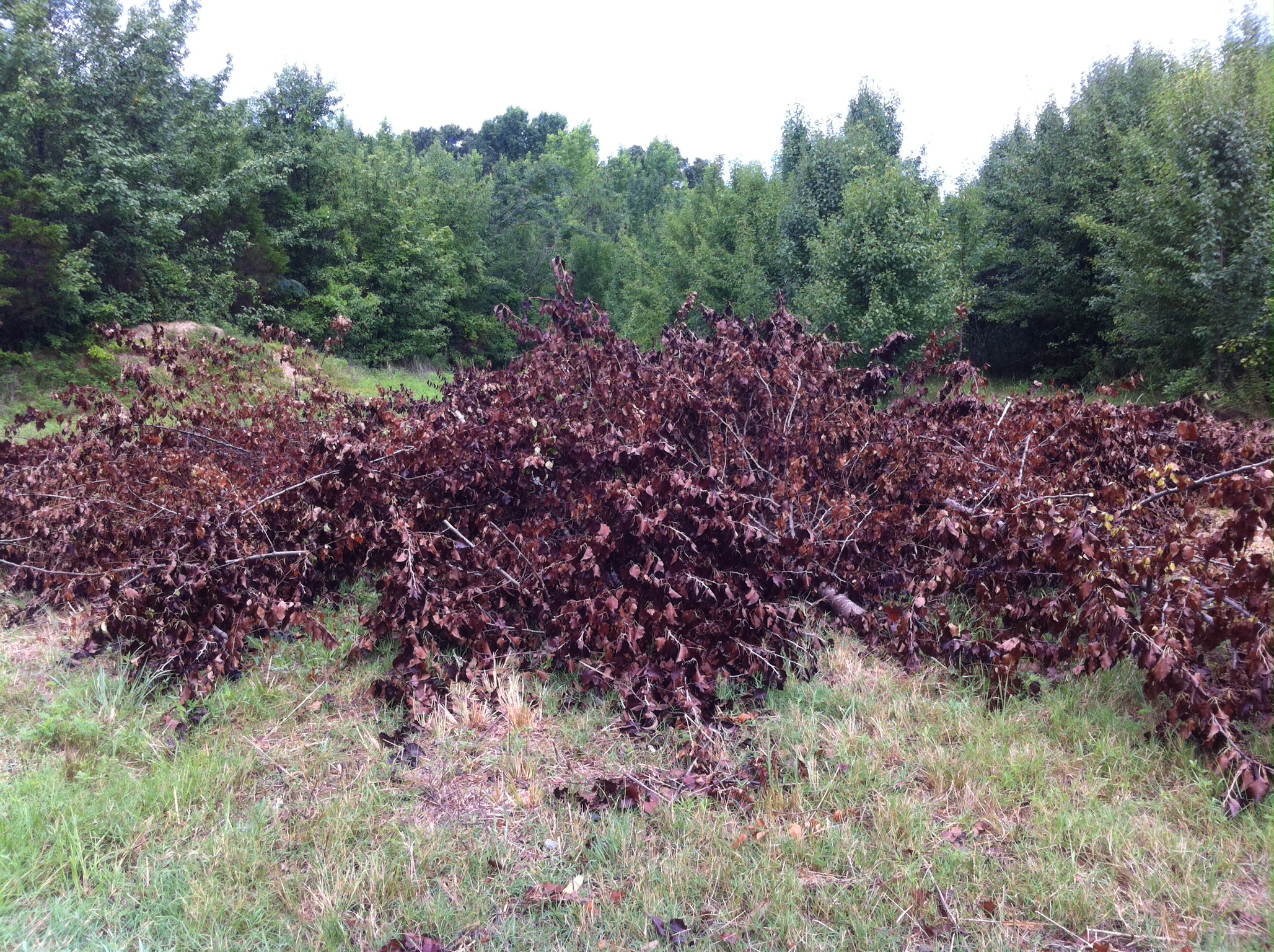
Brush Pile (dried out)

Brush Pile (dried out)

Granted, the brush pile was a little more scattered than we had hoped, but several were simply too heavy to lift and heave on top. The pile is spread out rather than tall, but we plan to trim it up before burning it.

The job isn’t finished, however: all of the little stumps have to go. Otherwise, they’ll just re-sprout from the roots. We’ve bought a mattock to help with that, but it’s all easier said than done.

Our neighbors plan to plant a row of lovely Japanese maples in their place. Good fences make good neighbors, and so do shared tastes.

Bradford Pears and Clearing the Cabin Spot

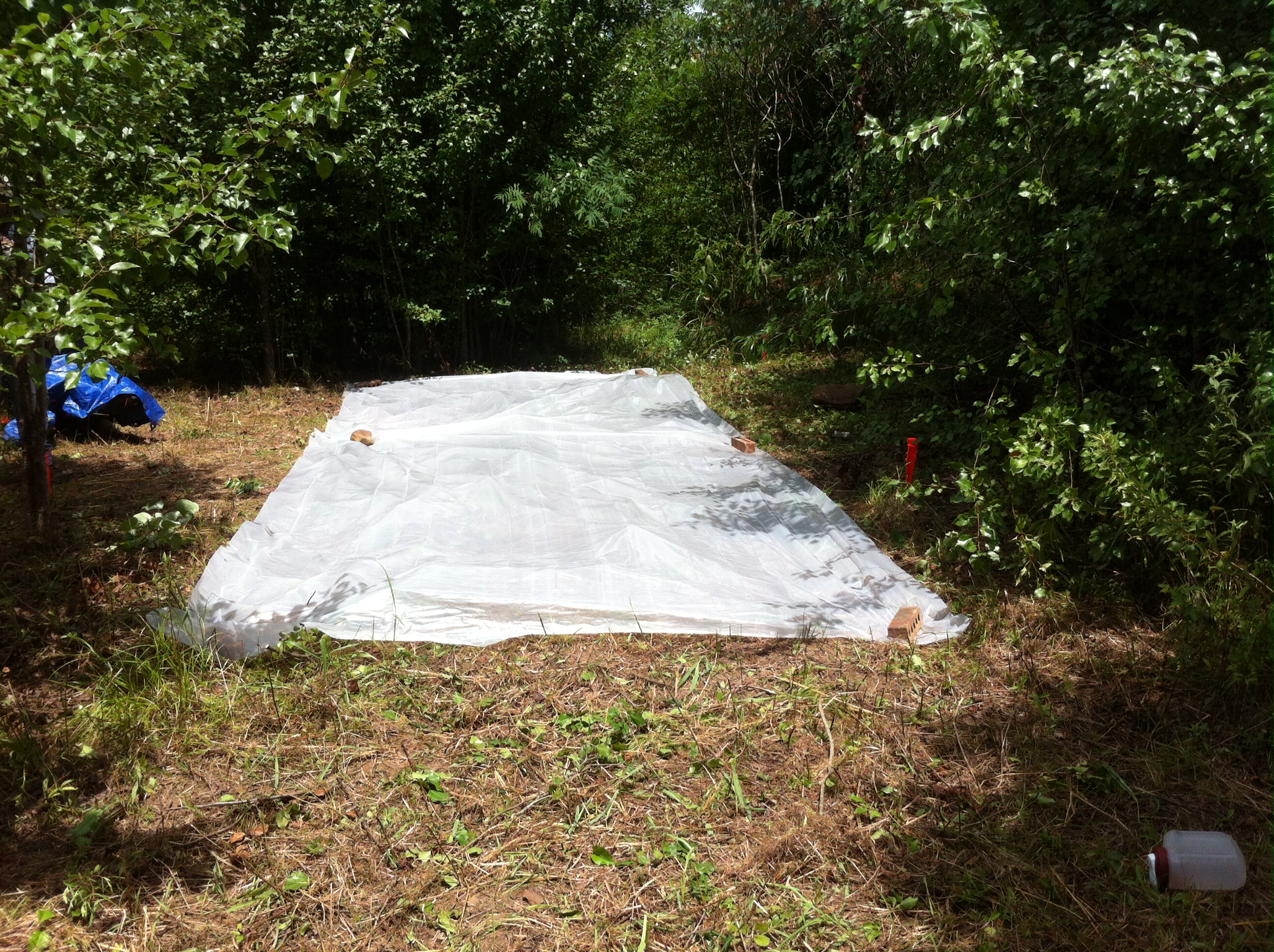
Cabin Spot with Plastic sheetIn the book of Genesis, God tells Adam, “cursed is the ground because of you; in toil you shall eat of it all the days of your life; thorns and thistles it shall bring forth for you.”

And then God created the Bradford Pear, or at least the cross-bred variety covering our land like a plague of locusts.

Imagine if thorny vines grew into trees. Imagine a super-plant that can perniciously sprout out of its own roots and grow in a cluster. Imagine interlocking branches and no smooth surface to grab when dragging them away. Imagine inch-long thorns jabbing arms, legs, and abdomen, leaving a tetanus-shot soreness and a purple bruise.

Granted, in spring they blossom white—they’re lovely if you can get past the stench. In autumn, the leaves are breathtaking shades of red, yellow, and orange. https://en.wikipedia.org/wiki/Pyrus_calleryana

But unless cultivated, they’re literally a thorn in the side.

Nevertheless, we’ve cleared enough to put down a sheet of plastic roughly the dimensions of the tiny cabin. This sheet is 10’ X 25’, and our cabin (with porches) will be 16’ X 22’. We still have to remove some stumps, and the impending rain should work in our favor for once–hopefully softening the ground enough for us to pull them out.

Receding Waters

It’s still a vast mosquito breeding ground, but we’re no longer ankle-deep in puddles. The tradeoff: a fiery sun and temps in the 90s.

Before we left for Scotland, we used the boards in this picture to walk from the driveway onto the land. The boards were submerged, but they kept our boots from hitting bottom and sinking in the mud.

ruts

We came armed with four, 80 lb. bags of Quickcrete to drop in the ruts. We didn’t need them.

In addition to this lovely “Surprise Lily,” we found our field had been bush-hogged. (Thanks again to the mayor.)

surprise lilybush-hogged field

We decided on yet another location for the cabin. The first spot had been too soggy, the second too sunny. This time, it seems just right.

Side Trip

*Written on 5/30 but would not post!*

The journey itself is my home.
–Matsuo Basho

Today we’re taking our home-journey on the road…to Scotland! Ten years ago were married there, in Tulloch Castle (once owned by the Bane clan and still bearing the coat of arms).

We’ve left wet Arkansas, which is expected to receive more rain next week, and hopefully when we return we can pick up where we left off on building our cabin.

In the meantime, our little Bane clan (nine people, three generations) is making a pilgrimage to the “home country.” We’re clad in raincoats with scarves on the ready.

A Ton of Work…Literally

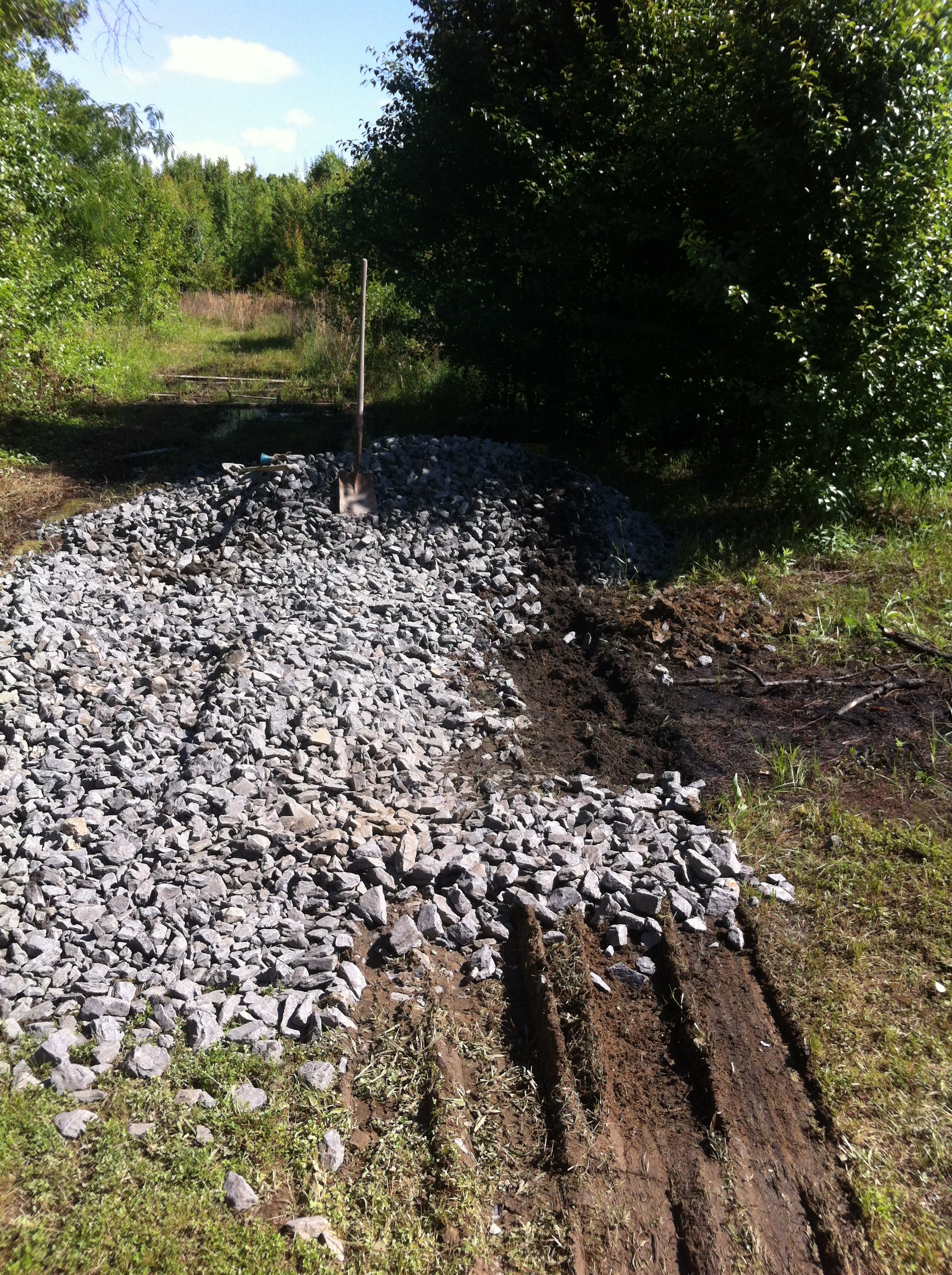
5-22-15 driveway with partial rockA few days after our sinking episode, we called a gravel truck. The problem: because the clay was so soft, he couldn’t gradually release the rock so that it spread evenly. He just had to dump it. While he went for another load, we spread it with shovels, shoes, and gloved hands.

We hadn’t expected anyone to be able to come out on such short notice, much less deliver multiple loads. Otherwise, we might have had more hands on deck! Instead, it was just the two of us. We had planned to spend the day clearing the new site for the cabin, but we knew this had to be done. More rains were on the horizon, and the driveway was basically a 6’ x 22’ mud hole.

The air was cool and the day was lovely, but after spreading the third load we were worn out—and the driveway was only half done.

Then, the mayor of Higginson himself showed up—tall and serious, with a resemblance to Tommy Lee Jones. He was in the neighborhood because around the corner a stretch of houses were having some sewer problems. [With a composting toilet we won’t have to worry about that!]

He exuded silent confidence while sizing up the situation. He told us he’d be back with a backhoe, and five minutes later we watched, mouths agape, as he smoothed out the freshly-dumped load.

5-22-15 driveway with rock

We asked if we could make a donation to the town, but he wouldn’t take any money directly. Instead, he said, “If you want, go to City Hall and make a donation to the 4th of July fund.” He seems to take his civic position as one “for the people.”

Thankfully, our cabin-building schedule was only tentative, or else we’d be behind. At the moment, we’re under a severe thunderstorm warning, and up to five more inches of rain are expected this week. We’ll go out to the land on Thursday to see if our new site is still above water.

The Best Laid Plans of Mice and Men

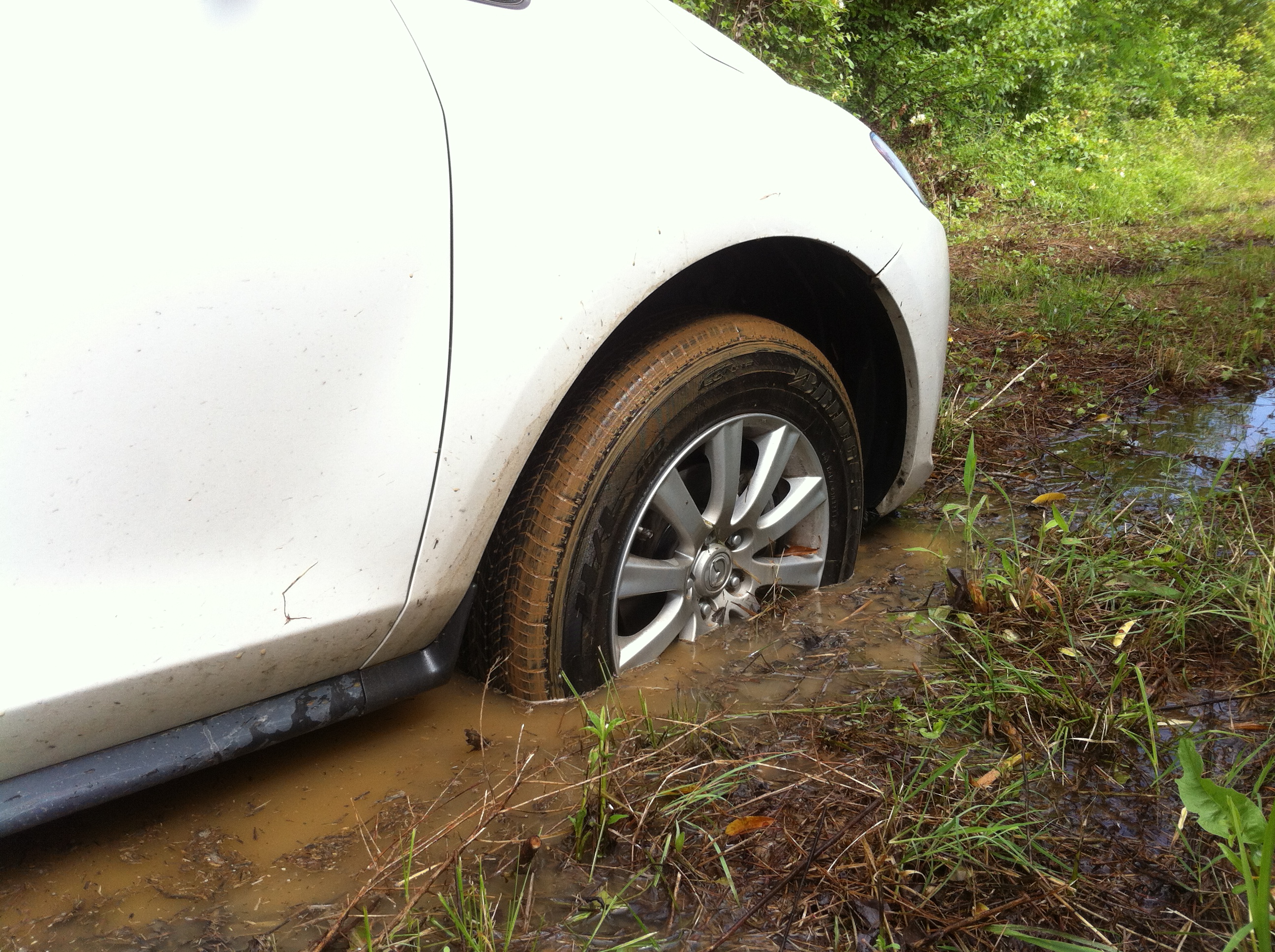
Although the driveway was still pretty wet, we thought we’d push on through in the car and save ourselves the trouble of hauling equipment over the mud puddles.

5-19-15 Car in the mud

In short, we caused ourselves more trouble than we saved.

The title of this post comes from the Robert Burns poem “To a Mouse, On Turning up in Her Nest with the Plough, November, 1785.” He apologizes to the mouse, whose house he has accidentally destroyed at the onset of winter, then philosophizes:

 The best laid schemes o’ Mice an’ Men

Gang aft agley,

An’ lea’e us nought but grief an’ pain,

For promis’d joy!

He then tells the mouse that though she’s unfortunate in the present moment, she’s still luckier than he: humans look back on a difficult past as well as anticipate future hardship.

After over an hour of futile attempts, we were soaked and muddy, spirits dashed. A kind neighbor drove by and pulled us out with a chain. It was a moment of triumph.

We then discovered that with the recent rains, our cabin site had turned into a swamp. To our credit, the house stakes were on the highest ground. Still, our “castle” doesn’t need a moat, so we’re currently looking for a new spot. We probably need more sun for the solar panels anyway.

Looking back on the mistakes we’ve made and knowing that more surprises are no doubt on the way, I can relate to Burns’ poem. But the kindness of strangers, not to mention friends and family, gives me comfort.

Composting Toilet: Not Flushing Your Money Away

When we moved into our current home, each bathroom was its own color: sky blue, bright red, and teal. That included the sink, tub, and toilet. With five people in the house, using the toilet only three times a day, multiplied by an average of four gallons per flush, we used 21,900 gallons of water a year, not including showers, laundry, or dishes.

Over the years we’ve remodeled the bathrooms, replacing the toilets with more efficient ones that use a lot less water. Still, we’re wasting thousands of gallons a year of perhaps the most precious natural resource we have.

This time we’re going with a composting toilet. It is what the name implies: waste, through various chemical processes and a little time, becomes soil.

The low end of composting toilets requires only a bucket and peat moss. A mid-range toilet requires frequent emptying, possibly before the waste has finished composting.

High grade composting toilets are expensive—relatively speaking. The one we are currently looking at http://www.envirolet.com/320.html is around $3,200 (on sale through tomorrow).

That is considerably more than we had wanted to spend (three times the amount of the materials for the shell of our cabin), but it’s still cheaper than a septic tank. And rather than empty the waste ourselves, a solar-powered battery will suck it out of the house and into a composter. The great thing is, it only has to be emptied once a year, after it’s through composting.