Tiny Cabin: Back in the Saddle

The first week after the accident is a blur of bandages, medicine, and doctors’ appointments. That, and kind friends and family bringing by food and checking in.

All of the various doctors–the ENT, general physician, optometrist, and chiropractor–reiterated that the fall could have been much worse. We are counting our blessings.

On other fronts, we found out that my mother-in-law’s pancreatic cancer has developed to Stage 4, and one of my step-daughters moved to South Carolina with her baby, Alex.

It would be easy to say that life moves forward and we move with it. But that glosses over the emotional processing that great (and abrupt) changes demand.

Chuck’s body is still healing–the hematoma in his right arm restricts how much he can lift, and the nerves in his face are slowly regaining feeling. The emotional wounds, however, remain fresh.

I spent several sleepless nights and red-eyed days thinking of our next move. My main concern: the 12/12 pitch roof. We went away for a couple of days to celebrate our 11th anniversary and to clear our heads.

We reached out to Chuck’s cousin, Scott, who has worked in construction and even built his own house. He was up to the challenge. Once we knew we had the roof covered, we felt we could make plans. And I could get some sleep.

It was now time to finish the decking, which would require a third person, not to mention poise on scaffolding. A colleague, Russ, volunteered to help, and we managed to tack up the rest of the decking in less than two hours. It was an enormous hurdle after we had seriously questioned whether or not we would be able to finish the cabin at all.

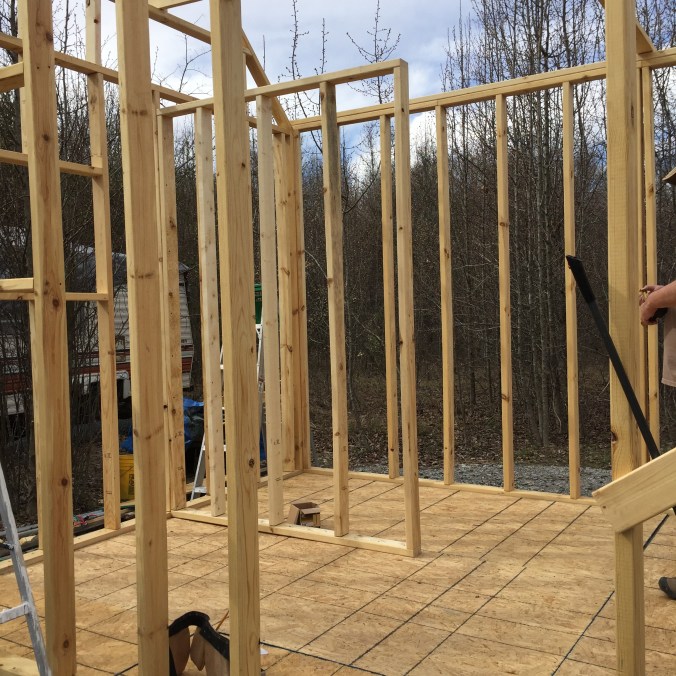
After the decking, our next move was to get as many walls up as possible.

We were under a heat advisory, with temperatures in the 90s and a heat index over 110 degrees. Chuck and I started at 6:30 and had to quit before noon. Chuck’s shirt was soaked to the hem, and my face was puffy and red.

At first, I held the sheet of OSB while Chuck fired the nail gun. But I wasn’t strong enough to hold the full sheets straight, and Chuck’s arm was tiring out from the heavy nail gun. So we switched.

Chuck said he was glad I had gotten over my fear of the nail gun. “I wouldn’t go that far,” I replied. I’m still terrified of it, and rightfully so. But I’m less afraid when I’m the one in control of the beast. When I was holding the board, I had to wait in anticipation for the loud bang, puff of air, and cloud of displaced wood particles.

It takes both of my hands to keep the nail gun steady, but now I know what to expect–and I know when it’s going to strike.

We didn’t get as far as we had hoped, but we got our strength and momentum back.

A blog on the roof will follow soon…


Tiny Cabin Update: Emergency Room

The day began simply enough: cool air, soft light. We were tired from the previous day’s work but motivated and optimistic.

Our neighbors, ever generous, let us use their electricity so we could plug in the air compressor for our nail gun. It’s so heavy-duty that I can’t wield it with any accuracy. Then again, I’m not all that strong.

Chuck hoisted the panels from the ground, and I stood in the loft to guide them into their proper place. A 2″ x 4″ acted as a lip the panel could rest against until we nailed it up. The first three panels Chuck nailed while standing in the loft.

We took a break and debated whether we should do the 4th panel with a ladder or take apart the scaffolding inside the cabin and reassemble it outside.

We had been up and down ladders all week, and we always did so with a great deal of care. Nevertheless, I now understand the expression you can never be too careful.

The board went up easily, and I stepped inside the cabin to make sure that Chuck’s nails were going into the rafters and not simply through the panel. All went in perfectly. He was coming down the ladder, and I heard him say, “I’m going to fall.”

Just writing those words makes me break out into a sweat all over again. I saw him mid-fall, and then he hit the gravel and rolled. My memory here is spotty. He sprang up, which surprised me, but then he looked as if he would pass out. He sat down on the floor of the cabin, and I had him lean back. A stream of blood dripped from his head. I yelled for help as I dialed 911 with one hand and held his head with the other.

Our neighbors, who were thankfully outside at the time, came running. Amy brought a towel and John gave me their address–I had forgotten ours since we technically don’t have one yet–and their boys stood by the road to flag down the ambulance, which would not have easily found us otherwise. (I shudder to think that I might have had to leave Chuck alone to run the 100 yards to the road.)

Meanwhile, we began asking Chuck questions to keep him awake. He knew who I was, but he didn’t know the year. He knew who was president, but he had no idea who was currently running for office (which, I’ve been told, is not the worst thing to forget). He didn’t know how he fell, and he kept asking where he was, how he got there, and why his head hurt. The blood gushed from near his eye; the cut was long and deep. I had no idea if any bones were broken or how hard he had hit his head.

Amy did her best to comfort me as she and a friend drove me to the hospital. When I next saw Chuck, he was slightly more aware, neck in a brace, rivulets of dried blood across his face. As they were wheeling him off for a long CT-scan. I heard him ask the attendant, “Is my wife okay?” It made me laugh through the tears, and I’d like to think that was the point when I knew he couldn’t be too terribly hurt.

Still, I sat in the empty ER room alone, the florescent bulbs casting everything in a sterile, cold light, all of the room’s carefully-chosen trappings without purpose, and I realized that without Chuck, my life would very much feel that way.

I didn’t have to dwell on these thoughts long, thankfully, as his boss (and friend), Terry, showed up only moments later. Soon after, a close colleague arrived, and then family–including his best friend Danny, who drove us home.

To briefly summarize three long hours, we found out that Chuck has an orbital fracture but not a concussion. The doctor did an excellent job sewing up the gash–thirteen stitches in a crescent shape around his right eye. He was told to rest for two weeks.

He’s black and blue, with a hematoma in his right arm, but after nine visits to various doctors and the chiropractor, he is walking fine and feeling much better.

We would, of course, like the cabin to be finished, especially before the summer heat sets in. But first there are more important things to rebuild. And plenty to be thankful for.


Tiny Cabin: Bees, Rafters, Monkey Bars

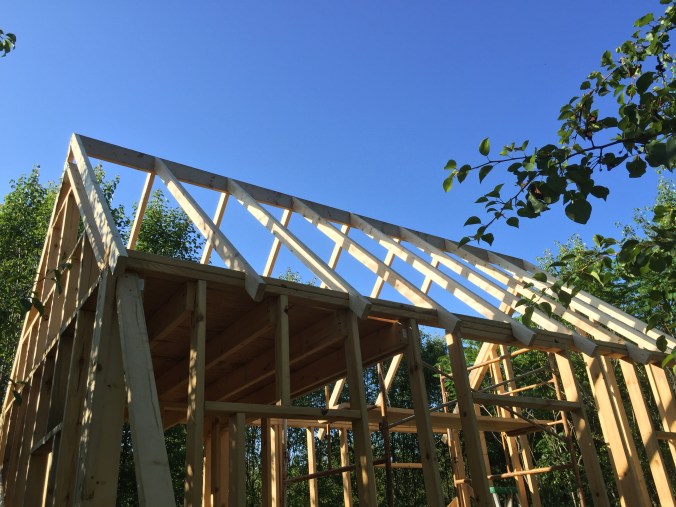
After much debate, we decided to redo the rafters on the tiny cabin. The first time around, something was amiss. The directions said 92″ boards, but the notch didn’t line up where it was supposed to. We lowered the crossbeam in hopes of cinching everything together, but it didn’t quite work.

What we have since realized: we needed 96″ boards. (Another page of the manual had 96″ boards listed, so we think the 92″ was a typo.)

Wednesday we got an early start and managed to have all of the rafters down by afternoon. This time we had scaffolding, which made the process much easier–and far less scary. Though it was bigger and higher than the elementary school jungle gyms I grew up on, scaling it made me feel like a kid again. The hundreds of hours I spent doing daredevil tricks on the monkey bars reminded me of a time when I thought I was nearly invincible. It was just the confidence boost I needed, though my stomach wasn’t convinced enough to untie the knots.

We decided to leave the crossbeam up knowing that rain was on the way.

Rafters partly down

The first item on today’s agenda was to take down the previous crossbeam, which was hanging by a couple rafters. We sat the crossbeam on the scaffolding, and as I was banging out the nails on the final rafter, a high-pitched buzzing sounded close to my ear. I turned my head just in time to notice a perfect hole bored in the wood and a large bumblebee shooting out of it.

My jungle gym skills were put to the test as I raced down the scaffolding and ran. I had no idea how many bees were coming for me. They weren’t vengeful, though. It turned out that there were just two, and they spent the rest of the day buzzing around the cabin looking for the entrance to their former home. We propped the plank against a tree hoping they would find it, but the bees knew where their home should have been and wouldn’t look elsewhere.

Rafters Down

The hardest part was securing the crossbeam. It was a test of balance and strength (amid searching bees) as we nailed in the first couple rafters and then hoisted the crossbeam into place. The day was heating up, so we took periodic breaks in the dwindling shade.

Chuck cut the rafters while I measured and marked where they would need to go. I nailed in the ones above the loft, but I wasn’t tall enough to get a good angle on the ones above the scaffolding, so Chuck did those. I was glad–blisters had already begun popping up on my hands. We managed to put up all but one rafter–and only because the saw batteries were dead and we couldn’t finish cutting the board. At least we’ll know exactly where to begin tomorrow.

The crossbeam sits much higher now, which will give us more room in the loft. Best of all, everything lines up.

New Rafters

Our next step: the roof!

Tiny Cabin: Summer Growth

Just hours after Chuck posted his last grade and officially began his summer, we headed to the land with a riding mower: the yard maintenance was long overdue.

We had a tiny window before rain moved in, and it was just enough time to get the main parts of the yard under control. Once the sun comes back out, we want to be ready to do some roofing!

Tiny Cabin Garden SpotTiny Cabin Land Cleared May 2016

The riding mower worked its magic, but it couldn’t handle the Bradford pear stumps along the driveway. We alternated weed-eating and hacking with a handheld weed cutter. Our arm muscles ached back into the memory of last summer’s clearing.

driveway-before

Uncleared Driveway, May 2015

Though the cabin is just a frame–and a tiny one at that–I look back at where we were last year and remember how far we’ve come. Our first attempt at driving onto the land ended with us stuck in the mud and a good bit of our budget spent on gravel. Because the truck was unable to spread the gravel evenly, we spread most of it ourselves before the mayor showed up with a backhoe. I never mentioned it, but that day I tore my right quad. It felt like it had been ripped from my kneecap. It took over ten weeks for it to heal, but heal it did.

5-19-15 Car in the mud

May 2015

At this time last year, we cleared land deeper in the woods only to later find it had become a flooded mosquito sanctuary. By the end of June, we finally settled on the spot where the cabin is now, but soaring temperatures in July and August (among other things) kept us away.

Now the summer is just beginning, and though it’s supposed to hit 90 tomorrow, it shouldn’t stay hot long. There’s more rain sprinkled in the forecast, but soon we should have enough days to finally get the cabin “in the dry.”


Tiny Cabin Update

A lot of people have reached out and asked, “How’s the cabin going?” so it’s definitely time for an update. The short version: the rafters and cabin are still where we left them, kissed by alternating rain and shine.

The next step: roofing. As much as I’m ready for the cabin to be “in the dry,” especially with all the rain we’ve had this year, I’m not looking forward to roofing.

For starters, there is a chance, based on the way the rafters are sitting in the hangers, that the OSB boards won’t line up perfectly at the top. We certainly don’t want our cabin to leak! In the words of a friend, we’re going to have to go forward before we know whether or not we’ll need to go backward.

We rushed with the rafters because we knew six days of storms were coming. Now, in order to take our time, we may need to wait until the semester is over in five weeks. We’ll lose many gorgeous 70-degree days, but right now we don’t have as much time or energy as we feel we need to keep moving forward.

April is perhaps too soon for a 2016 retrospective, but a year’s worth of ups and downs have squeezed themselves into three months. An immediate family member was diagnosed with cancer, we’ve lost a friend and two relatives, and we’re facing a challenging situation with a family member who is struggling with mental illness.

Yet 2016 has been surprisingly bright and beautiful as well–a trip to Washington state for a conference and to visit friends, a yoga retreat with Kevin Gardiner, an exhilarating Springsteen concert, and wonderful moments with loved ones.

The journey to building our own cabin began nearly a year ago, and we are more resolved to finish it than ever. We’ve learned about construction, patience, and as The Boss would put it, “the ties that bind.”


Tiny Cabin: Fire and Rain

One week we’re burning the brush pile in 39-degree air; the next, we’re sweeping water from the cabin floor in a humid 75 degrees.

Completing the rafters last Saturday was a high point in our cabin building. My brother-in-law came to help, and by afternoon all 18 rafters were up. The day could not have been more beautiful, even if the sun left its mark on our bodies.

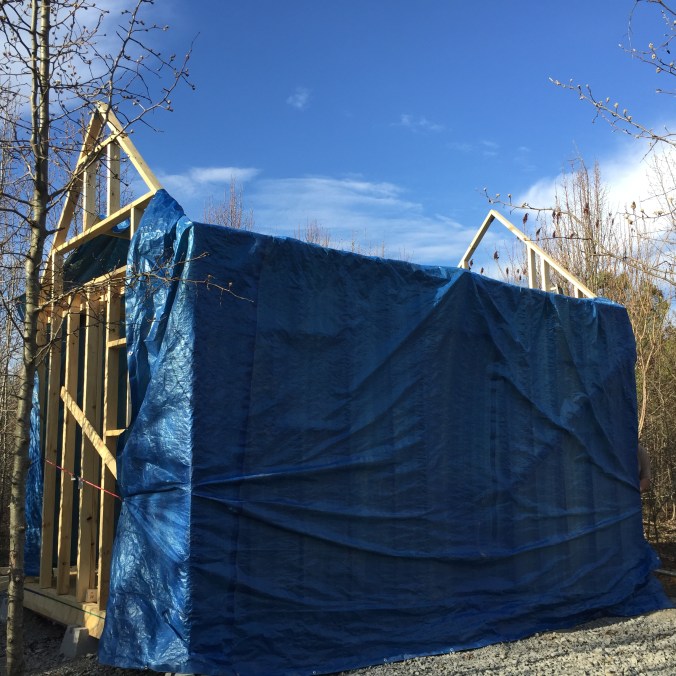
We knew that six straight days of rain were ahead, so we covered the cabin with a tarp and put some plastic sheeting over the floor. The rain began Tuesday night, and when we went Wednesday afternoon, the land surrounding the cabin was a lake.

The water went past our ankles and soaked Chuck’s pants to the knee. Luckily, I had my rain boots on, though I discovered the left one has a hole.

In spite of our bungee cords, the tarp had blown off one side and rain was pouring in. There were already several inches of water on the floor. Using a long pipe as an extension, we were able to move the tarp over the rafter peak and re-secure it. We splashed back to the car knowing that five more days of rain lay ahead.

There was a possibility that the water would keep rising until it engulfed the cabin floor. In that case, we decided we would haul in more dirt and rebuild. Though we would like a cabin built on land, we also considered that we might have to build on a trailer bed. We decided that at some point we would have to cut our losses and run—how many thousands of dollars and hundreds of hours are we willing to spend on a thorny Bradford pear plantation?

Thankfully, the waters receded and we didn’t have to act out any of our worst-case scenario plans–at least not yet. More rain is forecast for tonight, and we will have to see how well the floor dries out this week.


Tiny Cabin: Building the Bathroom Walls

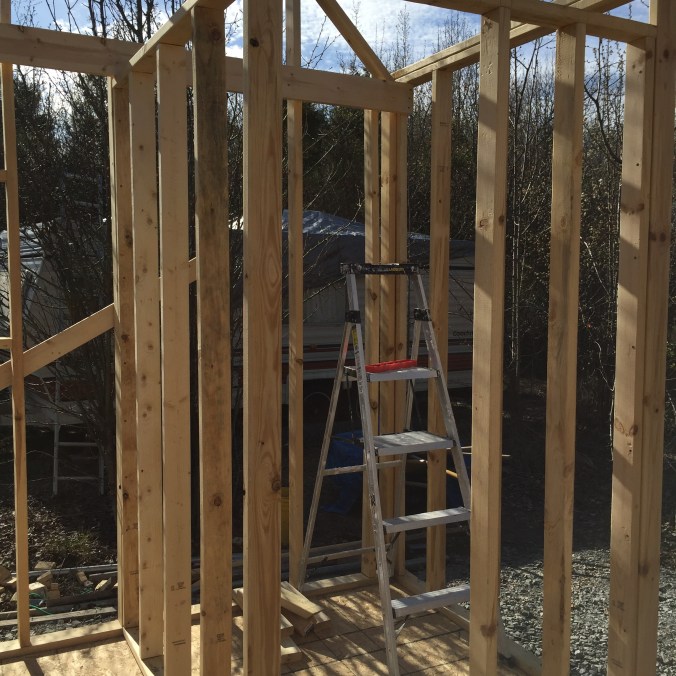
I surprised myself by nailing together the bathroom walls in less than thirty minutes. However, we immediately realized that the 8′ studs were so tall that our loft would be cramped. (Though we are following a set of plans, we have made modifications, which indirectly affect other things…)

Bathroom wall

The walls came apart quickly. Chuck trimmed them down once we had settled on the best height. I put them back together, undaunted–time was on our side. Or maybe the act of banging nails was so deeply satisfying that I didn’t care.

In fact, later, as Chuck went to buy the 2′ x 6′ boards for the loft, I nailed down an additional sub-floor. The OSB we originally used had too much give, so we decided to add a layer.

We raised the bathroom walls and connected them with a small metal plate. One of the bathroom walls will brace the 2′ x 6′ loft boards in the middle. No bigger than the loft is, the boards (which will be nailed into the studs of the front and back of the cabin) would have held us without the additional support. Still, it certainly can’t hurt, and we like the aesthetics of it.

Bathroom wall upBoth bathroom walls up

Building the bathroom frame has inspired us to do more research into how we will get water to the bathroom. We have vague ideas of how to catch, filter, and heat it, but soon we will need to fine-tune our logistical plan. Luckily for us, so many others have solved these problems and generously shared their experiences. We know that it isn’t a question of if, but how.

A <2 minute video on off-grid plumbing

An article on tiny-cabin plumbing

Rain was in the forecast, so we spent nearly an hour getting the tarp over the walls. With tired arm muscles, such a task is all the more challenging.

Tarp covering the tiny cabin

Tiny Cabin: Four Walls!

Chuck and I knew that putting up the walls on the tiny cabin was (ideally) a three-person job, but until minutes before heading to the land, we thought we would be alone in our pursuit. In fact, we were debating if we should even try–it was all four walls or nothing. We didn’t want a repeat of the front wall falling over in a wind gust.

As it turned out, my father-in-law beat us to the cabin site!

The walls have been finished since December, but good weather plus time off work have not been synced. We finally had our chance: last Saturday was a nearly 70 degree day. What’s more, this week is Chuck’s spring break, so we knew we would have time (and, luckily, good weather) to continue working on the cabin after the walls were up.

I have to say–my father-in-law really knows what he’s doing. Not that we don’t have some idea, but we occasionally we hit a snag that causes us to question ourselves, which takes up time.

In a matter of hours, all four walls were up, complete with California corners and additional supports. We still have some windows to finish framing, but time, for a change, is on our side. We left when the sun began to slant below the horizon, tired yet triumphant.


Tiny Cabin: Clearing a Path to the Pond

Among all of the ephemeral childhood memories I have, a few remain vivid.

The first time I went fishing, for instance: four years old, sitting on the high bank of my grandma’s pond, the red and white bobber on my fishing line disappearing beneath the water, me jerking the pole up with all my strength to hook the catfish.

It got away with the worm, of course, but the thrill of the unseen manifesting itself, however briefly, was enough to cement this memory more than any big fish story I’ve had since.

Our land has a sizable pond, but we haven’t been able to reach it due to the overgrowth. I saw it last winter before we signed the paperwork, but I haven’t been able to get close to it since.

As much as we want to work on the cabin, now is the best time to clear paths, as we don’t have to worry as much about poison ivy, ticks, and snakes. Leafless Bradford pears are also easier to trim back and cut down. I can contend with three-inch thorns as long as I can see them.

We came home bruised and scratched, though triumphant: we cleared a path to the pond!

Bradford Pear Thorns

Three-inch thorns on Bradford pear branches

Brush Pile

Ever-expanding brush pile

Cabin Site 2-16

Tiny cabin site

Pond picture

A view of the pond

A Few of My Favorite Things…for the Tiny Cabin

I’m the kid that collected scores of stuffed animals and named each one. I had a rock collection, a stamp collection, and to this day I have my threadbare Blanky. I still regret my decision in 3rd grade to sell my Care Bear collection in a garage sale. As I grew up, I continued to surround myself with things that were special to me, whether a postcard, a painting, or a pressed flower.

My astrological sign is Cancer—the crab with pinchers. I like my shell and, by extension, my home—it’s a reflection of who I am and the things I value. I need that space to be a place of rejuvenation or else the pinchers come out.

My senior year of high school, our house caught on fire. I didn’t lose my possessions, but the experience made me ask what was really important. Had we lost everything, what would I have wanted to save? Aside from the obvious answer, my family, there weren’t very many things that made that list—a Swedish plate my grandmother gave me for a watercolor palette, my grandma’s handwritten book of poems, my mother’s quilt.

I’ve spent a lot of energy over the years sifting through my possessions and paring them down. It’s hard to choose what isn’t making the cut; it’s much easier to decide what is.

In a tiny cabin, there will only be room for the essentials and a few of my favorite things. Here’s what is on that list:

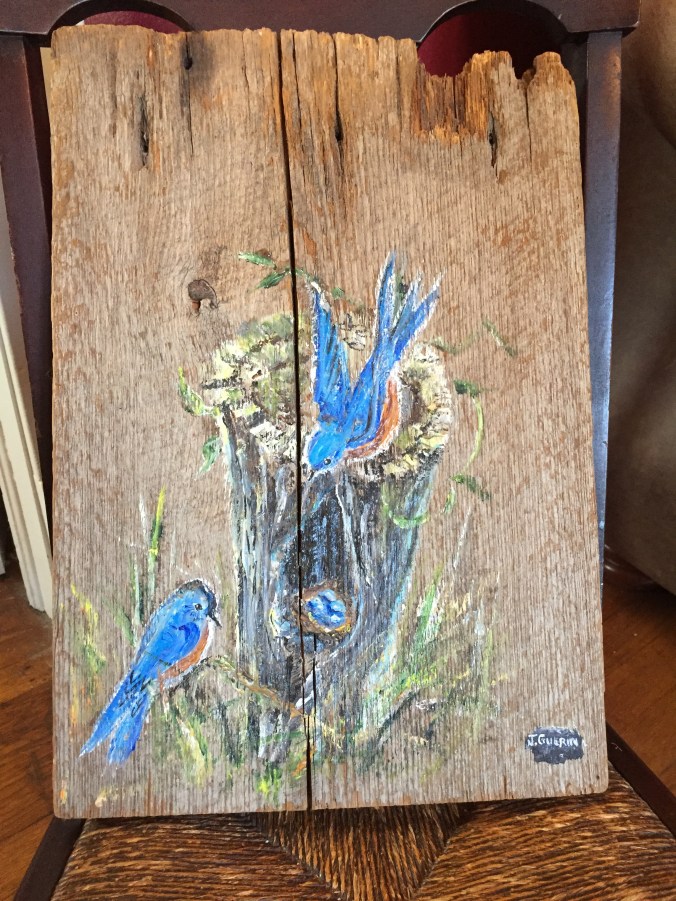
My grandmother’s oil painting on barn wood of two bluebirds.

Oil Painting of Bluebirds - Jackie Guerin

A wooden cup from my dad.

Wooden Cup with Colored Pencils

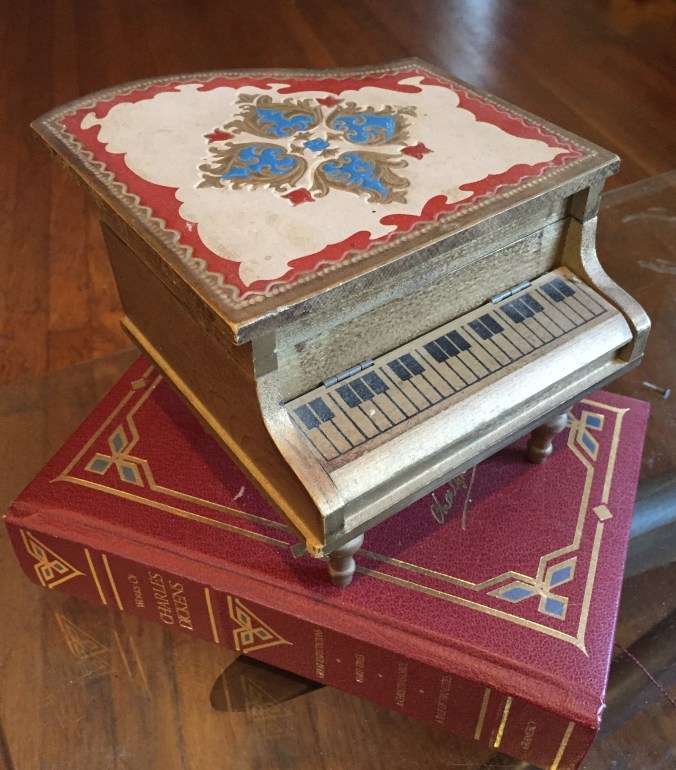
The antique jewelry box from my mother.

Antique Jewelry Box

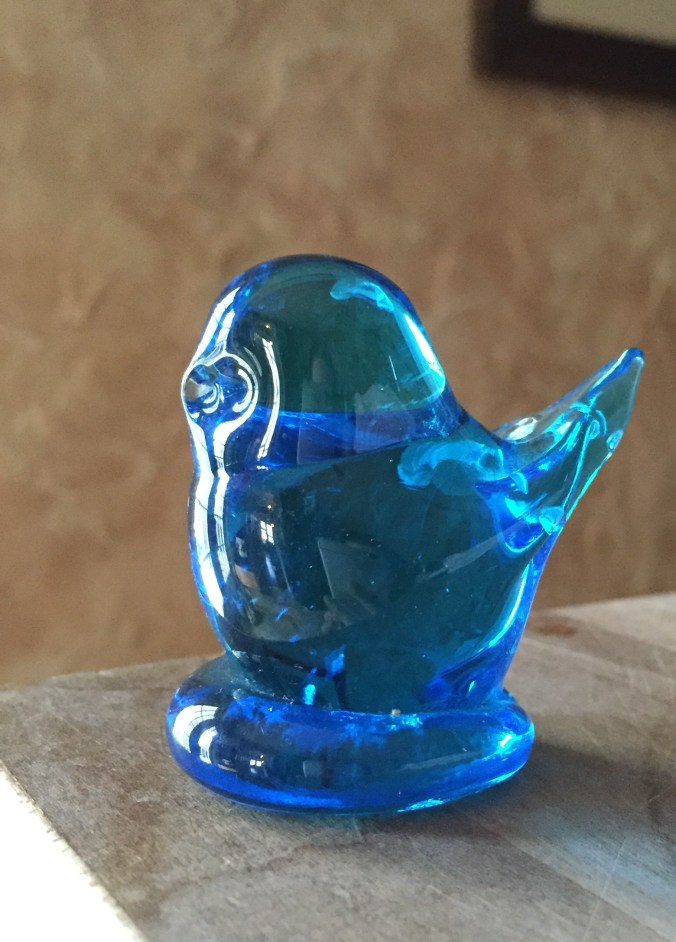
My grandma’s glass blown “Bluebird of Happiness” by Arkansas artist Leo Ward.

Bluebird of Happiness - Leo Ward

Against these things, the rest fades quietly in the background.